
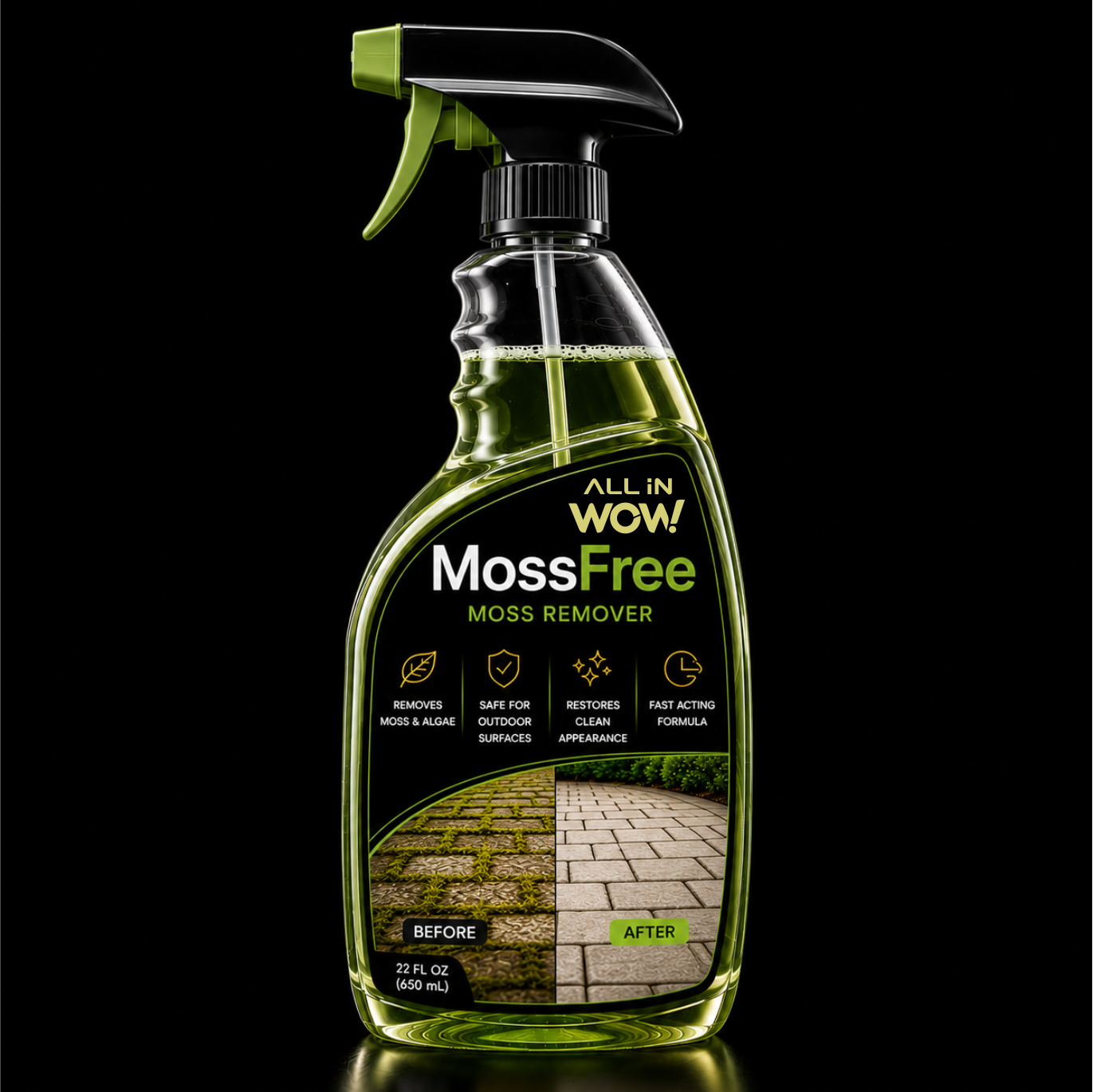
Moss remover.
Moss on a roof might look “natural” or even charming at first, but in reality it’s an unwanted guest that slowly destroys both the look and performance of your roofing. Understanding where moss comes from and how to remove it safely with products like ALL IN WOW! – MOSSFREE – MOSS REMOVER is key to keeping your roof in good shape for years.
Moss Remover. When Does Moss Start Growing on a Roof?
That green carpet that shows up on shingles or tiles doesn’t appear overnight. Moss spores settle on the surface and, when conditions are right, they start to spread and colonize the roof.
The main reasons moss grows on roofs:
-
Limited sunlight
Moss thrives in shaded areas. Roof sections facing north or northwest are especially vulnerable because they get less direct sunlight and dry more slowly after rain. -
High moisture levels
Roofs with a low pitch or poor drainage tend to hold water longer. Constant moisture creates the perfect environment for moss, algae, and lichen. -
Trees close to the house
Overhanging branches shade the roof, drop leaves and needles, and trap moisture. Tree sap with a more acidic pH can also encourage moss growth. -
Air pollution and dust
Fine particles settle on the roof and act as a “bed” for spores and organic matter, helping moss take hold. -
Roofing material
Some surfaces, like unglazed ceramic tiles, concrete tiles, or porous natural materials, are more prone to moss growth than smooth metal or certain asphalt shingles. -
Poor ventilation
Inadequate ventilation under the roof can cause condensation and excess moisture, which indirectly supports moss growth on the outer surface. -
Lack of maintenance
Roofs that aren’t inspected, cleaned, or treated regularly are far more likely to become overgrown with moss and other biological deposits.
Moss on a roof isn’t just a cosmetic issue. It holds moisture against the surface, which can lead to damage, shortened lifespan of the roofing, and higher maintenance costs over time.
Moss Remover. Which Roofs Are Most Vulnerable to Moss?
Both the roofing material and the roof’s orientation play a big role:
-
Ceramic tiles without protective coating and concrete tiles are highly susceptible to moss if they haven’t been sealed or treated.
-
Metal roofing generally resists moss better, but is not completely immune—especially in very damp, shaded locations.
-
Even glazed tiles and asphalt shingles can eventually develop moss if conditions are favorable.
Roofs facing east/west are typically less exposed than those facing north/south.
The south-facing side usually stays drier and cleaner, while the north-facing side often ends up covered in green patches due to constant shade and slower drying.
Regular cleaning and the use of specialized products like ALL IN WOW! – MOSSFREE – MOSS REMOVER, followed by proper protection (sealants, coatings), help minimize the risk of heavy moss buildup.
Moss Remover. Is Moss Ever “Good” for Your Roof?
Natural moss and lichen on a traditional pitched roof may look cozy or “storybook,” but on standard residential roofing it’s almost always a problem:
-
It traps moisture.
-
It can slowly damage the surface.
-
It increases the risk of freeze–thaw cracking in colder climates.
-
It makes the roof heavier and more water-absorptive.
There are such things as professionally designed green roofs, where vegetation is intentionally installed and the roof system is engineered for that purpose. But that’s a completely different setup, with special layers, drainage, and structural design.
On a regular roof, uncontrolled moss growth offers no real benefit—only risk.
Moss Remover. Is Cleaning Enough? What Happens After You Remove Moss?
Simply scraping or power-washing moss off a concrete or cement tile roof can sometimes open up the pores of the material. That can lead to:
-
Increased water absorption
-
Freeze–thaw damage as trapped water expands
-
Higher overall weight from absorbed moisture
That’s why after cleaning, many professionals recommend:
-
Applying a protective coating to restore water repellency
-
Using impregnating or hydrophobic sealers to limit future moisture penetration
This combination helps reduce future moss growth and protects the roof against water and frost damage.
How to Protect Your Roof from Moss Long-Term
Painting or sealing a roof is not just about aesthetics—it’s a practical way to slow down biological growth. With the right products and techniques, the surface becomes:
-
Less porous
-
More resistant to rain, UV radiation, and dirt
-
Less attractive to moss and other organisms
Knowledge and experience are critical:
Different roofing materials react differently to cleaners, sealers, and paints. That’s why choosing the correct type of treatment and application method is so important.
When to Start Preventive Protection
To effectively slow down moss, fungi, and lichen growth, prevention should start relatively early in the roof’s life:
-
After about the first year, when the material’s pH stabilizes, is often the ideal time to consider impregnation or hydrophobic treatment.
-
Similar logic applies to paving stones and other exterior surfaces that tend to grow moss and algae.
Deep-penetrating, hydrophobic products can significantly extend the life of the roof and greatly reduce how often you need to clean it.
Before any sealing, the surface should be thoroughly cleaned—removing not only moss and lichen, but also tree sap stains and other contaminants that could interfere with the protection.
How to Remove Moss from Tile and Metal Roofs with a Moss Remover?
Regardless of material—ceramic tile, concrete tile, or metal—moss removal should be done carefully and methodically. A product like ALL IN WOW! – MOSSFREE – MOSS REMOVER fits perfectly into this process:
-
Remove thick moss and debris
-
For tiles: start with gentle mechanical removal using a soft brush.
-
For metal: a pressure washer can be used with appropriate settings and distance.
-
-
Apply a specialized moss remover
-
Use ALL IN WOW! – MOSSFREE – MOSS REMOVER according to the instructions.
-
Make sure the product is suitable for your roofing type and does not damage coatings or finishes.
-
Allow it to penetrate and break down the moss structure.
-
-
Clean gutters
While moss and debris are being removed, fragments often end up in the gutters. After treatment, clean the gutters to ensure proper drainage. -
Rinse the roof thoroughly
After the product has worked for the recommended time, rinse the roof thoroughly with clean water. -
Inspect the roof
Once clean, inspect for damaged tiles, coatings, or corrosion spots. This is the best moment to decide on repairs or additional protective treatments.
If you’re not experienced with working at height or using chemical products, it’s safer to have a professional contractor handle the application of ALL IN WOW! – MOSSFREE – MOSS REMOVER and any follow-up work.
What About DIY Mixtures (Vinegar, Salt, Ammonia)?
Homemade mixes using vinegar, salt, or ammonia are popular on forums and social media, but they come with issues:
-
They often lack long-term effectiveness.
-
They can damage roofing materials or finishes.
-
Misuse can lead to corrosion, discoloration, or weakened structure.
Professional-grade products like ALL IN WOW! – MOSSFREE – MOSS REMOVER are designed specifically for roofs and other exterior surfaces, offering better performance and safer, more predictable results.
Summary – How to Fight Moss on Your Roof Effectively
-
Moss on a standard roof is never truly harmless.
-
It traps moisture, accelerates wear, and can cause serious damage over time.
-
Regular inspections, cleaning, and proper moss removers are essential.
-
Using a dedicated solution like ALL IN WOW! – MOSSFREE – MOSS REMOVER, followed by sealing or protective coatings, gives you both immediate cleaning and long-term protection.
Taking a planned, professional approach to moss control is an investment in the durability, safety, and appearance of your roof for many years to come.

Reviews
There are no reviews yet.